
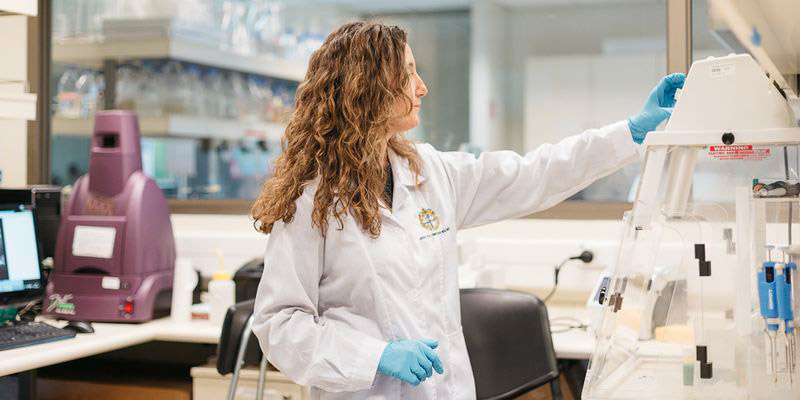
Interview with Dr. Beatriz Díez for Paula Magazine – La Tercera
For Beatriz Díez (47) it’s all about the sea, that dark and immeasurable mass that houses an important part of scientific mysteries. Raised on the shores of the Mediterranean, this Spanish researcher, who now lives in Chile, grew up feeling that what remained to be discovered in the depths of the ocean was so small and infinite that it would go unnoticed by human interest, and that the same would be true of the sea of cells that lived beneath her feet.
Beatriz Díez was a curious child, at least that’s what she remembers. In her native Alicante, Spain, she dreamed of being an archaeologist. She wanted to get into complex sites and discover new things, like why stones were different sizes or understand why some had different colors. Back then, she felt that the planet was much more than a static mountain or an infertile desert. Something told him that there was a mind-blowing living world hidden behind its shapes. Therefore, he decided to study Biological Sciences and dedicate himself to observe, microscope in hand, the behavior of the smallest part of living organisms: microorganisms.
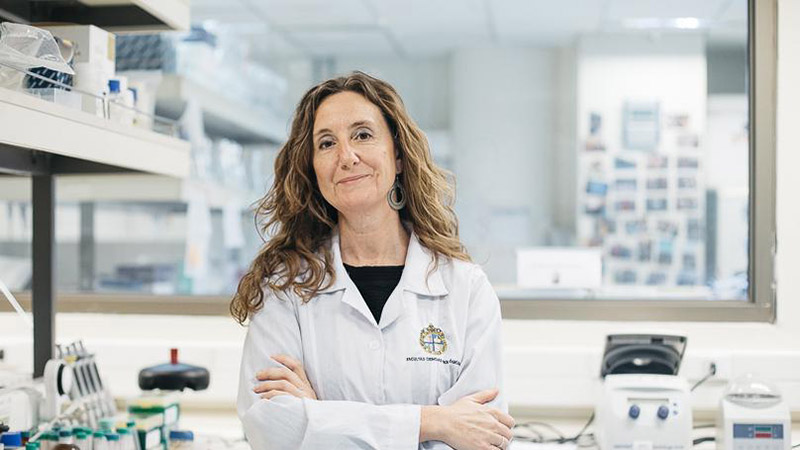
For this pioneering scientist in the use of molecular biology methodologies in the study of marine life, the sea is a necessity. That is why, at the age of 24, she decided to emigrate to the Autonomous University of Barcelona and study for a doctorate that would end up being the springboard to a prolific career in science. During her doctorate at the Institute of Marine Sciences of the Spanish National Research Council (CSIC), she worked at the old aquarium in Barcelona, just a few meters from the emblematic Barceloneta neighborhood. For her, that place where she would touch the pinnacle of scientific prestige for its methodology and microbial analysis of marine life -something that very few people did at that time-, emanated inspiration and love for marine life.
He says that during those years he could have studied whales, because he undoubtedly loved them, but he chose to go to the beginning of the trophic chain, where viruses, bacteria and all kinds of small organisms that nobody sees with the naked eye are found. “We still know very little about how many there are, what they do, how they relate to each other, what stresses them, what they might be good for or how we affect them. What we do know for sure is that marine life is an amalgam of complex biogeochemical cycles that begin and end at the smallest microorganisms in the chain. A better understanding of them could lead us to solve gigantic problems, such as survival in a place with extreme temperatures, less oxygen and less water,” he says, thinking of those extremophile organisms that have managed to survive where no higher living being, including humans, has been able to do so without help.
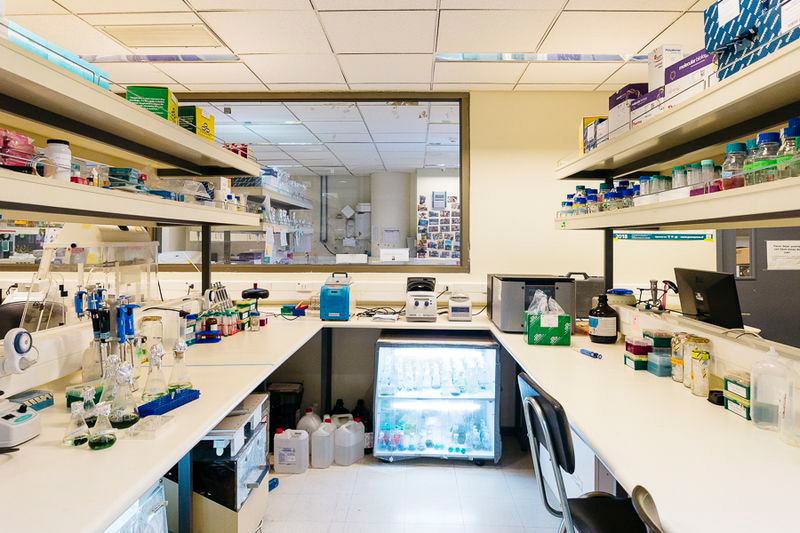
Following this line of research and going beyond a fictional movie about life on other worlds, in 2010 Beatriz Díez arrived at the Faculty of Biological Sciences of the Catholic University of Chile and set up her laboratory there. From that place, she works daily to advance in the understanding of how microbial life survives in the diverse extreme environments of Chile and Antarctica, which in turn have been highlighted by NASA as places of interest to evaluate different alternatives of human life on other planets.
Why did you decide to work in Chile and not at NASA?
I came to Chile by chance. After studying for several years the biodiversity of microorganisms in the oceans, such as the Mediterranean in Spain and the Indian and Arctic oceans in Sweden, I received an invitation to apply for a position in the Department of Molecular Genetics and Microbiology at UC. I knew Spanish scientists who loved this country, but I had never been here. In my first Google search I saw that there were millenary glaciers, more than 80 active volcanoes with countless thermal environments, the driest desert on the planet and a coastline of more than 4,300 kms from north to south. The microorganisms of this place have survived all that! It took me five seconds to see that this country was paradise for an environmental microbiologist and microbial ecologist like me.
It sounds like doing microbial research in Chile is a dream. Is it so?
Let’s take it one step at a time. Before that, Chile offers one of the most interesting opportunities to make a real contribution to science: to form a school of microbial ecologists in an extreme country, in the middle of such a fascinating natural laboratory that is in NASA’s sights because of its climatic and geochemical conditions. And that is where I am now, doing academia, sharing the laboratory and expeditions to Antarctica, San Pedro de Atacama, Patagonia or wherever with young undergraduate and graduate students whose passion is to investigate microbiology. However, the microbiota of this country, the smallest part of the ecosystem, has been super unexplored. Today we all know that in the North the skies are clearer to see a sea of stars, but with that sea of cells that is at our feet there is an interesting debt of methodologies and dissemination.
And what could be done to change this situation?
I think Chile should influence science and astrobiology worldwide, because everything that has to do with finding life and adaptations in unexpected places like geysers or glaciers, is the flag that is missing to help the knowledge of a new unknown world.
How does microbiology respond to these phenomena that are making us think about living on other worlds?
One only has to explain how life arose on this planet and how it has evolved to respond to that. Microorganisms have been here forever and they have adapted to be able to survive under any condition no matter how extreme or disturbing, including climate changes. They are responding all the time on how best to inhabit this planet and now it is up to us to learn from that. Because this is urgent. As humanity we have little time and many obstacles due to the damage caused by our evolution.
Speaking of evolution, according to Unesco figures, in Chile only 32% of scientific research is carried out by women. Why do you think this happens?
I am curious by nature and I think there are many women in the world who are also curious, but they live under circumstances or a culture that does not empower them as researchers. Talking about this topic is complex, because we are all to blame. But at the same time, we all have the potential and the responsibility to make changes. I was fortunate to live in Sweden, one of the countries that has made the greatest effort for equality. And as a woman, as a researcher, as a pedestrian, it shows. Equality permeates the community and empowers women to take leadership positions. I would love to see something like that happen here soon.
How could the participation of girls and young women in science be encouraged?
Women in science encourage more women to go into science. Making visible cases of innovative, creative women scientists, who with enormous sacrifice have been successful, motivates others to follow this path. That and having fun as a researcher and as a person, not seeing limits within oneself, regardless of whether you are a man, a woman or a girl. That is inspiring. I believe that the sensitivity and creativity that many Chilean women have will make them succeed once they manage to break down the limits and barriers. This is a struggle for reason and strength that will last a long time, because evolution is slow and sometimes adaptation can be painful, but I believe that this is a good moment at a global level and Chile will not be left behind.
Like microorganisms, which are constantly trying to jump over their limitations to evolve and adapt, right?
This is a matter of adapting day by day and evolving to achieve a goal and be happy, not because we women think we are smarter or better, but because we have the same potentials and we want to contribute. And we really know how to do it.
You can also read the interview in its original format at Paula Magazine – La Tercera