
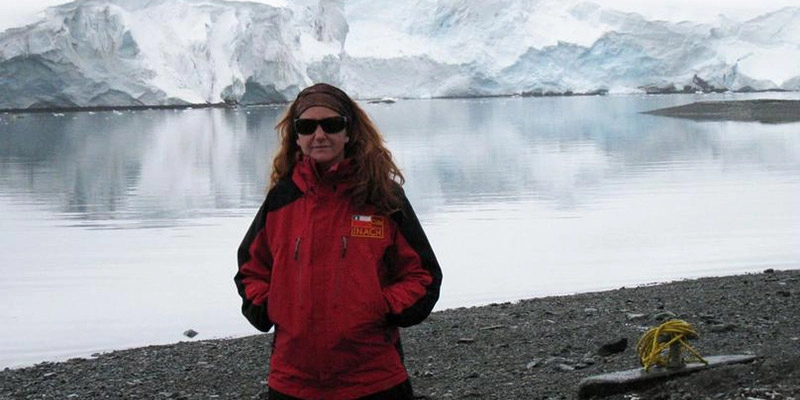
Interview Dr. Beatriz Diez for Ciencia en Chile
The Southern Ocean is conceived as a natural laboratory, which presents unique and challenging characteristics for any organism, such as low temperatures and high radiation, and despite this, they recently confirmed the presence of more than 2000 previously unidentified virus genomes.
Lorenzo Palma, Science in Chile. The Southern Ocean is considered one of the most isolated, since its waters are linked to the Antarctic Circumpolar Current, which may allow the development of endemic populations, including those of viruses, which are currently still being identified as novel, since there are not many studies developed in the area.
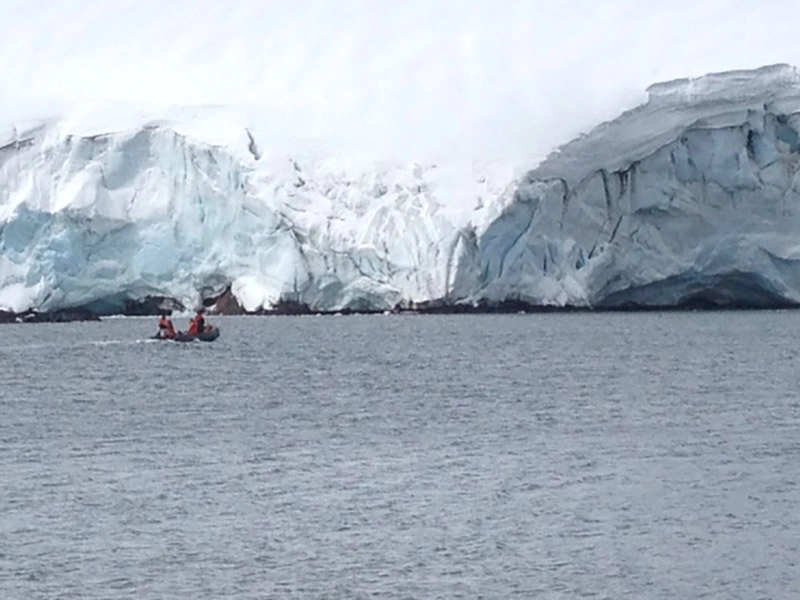
The identification of viruses is just the work carried out by scientists from the Pontificia Universidad Católica de Chile with collaborators from the University of Alicante, Spain, and they reported the presence of 2,416 new virus genomes in the Southern Ocean, which increases by 25% the total number of viruses recorded to date.
The results were published in the scientific journal mSystems, of the American Society for Microbiology (“ASM”). The group of specialists collected seawater samples from the shores of Greenwich Island, South Shetland Islands, West Antarctic Peninsula, for an entire month in February 2016 at a depth of two meters. In addition to these samples, 64 samples from public databases were used for this analysis of viral communities. Approximately 90% of the viral genomes recovered in this work had not previously been identified in these databases.
One of the most interesting results of this study, according to Dr. Beatriz Diez, researcher at the Department of Molecular Genetics and Microbiology of the Catholic University of Chile, is that 186 genera of the identified viruses could be endemic, meaning that only to date they have been found present in the Southern Ocean. The hypothesis of the experts is that most of these recovered viral genomes do not really constitute new viral genera, but represent highly divergent viral populations to already known viruses. This means that there is a low genetic flow with other oceanic regions and they have been under strong selection due to the geographic isolation and environmental pressures of Antarctica, also clarifies Dr. Sergio Guajardo, another co-author of the study. A fact of interest that this researcher tells is that the low temperature and radiation generate adaptations in the viral communities, which together with the geographic isolation are translated in the diversification of the marine viruses.
Dr. Beatriz Díez emphasizes that, in spite of the harsh conditions of the Southern Ocean, viruses adapt and continue to be successful, “it should be remembered that viruses are abundant in marine systems and strongly influence the composition and diversity of the microbial community”, detailed the researcher.
“Our analysis demonstrates that viruses in Antarctica carry genes analogous to those present in their host to ensure host survival during viral replication,” says the researcher and also explains that they carry proteins that may allow them to sense and respond to strong seasonal changes in temperature and nutritional conditions. In addition to proteins that may be part of a cryoprotective mechanism to enhance host survival during infection and ultimately increase viral fitness.
“Finally, we found evidence of certain adaptations that are associated with protein folding and increased flexibility to enhance enzymatic activity under the thermodynamically less favorable conditions of Antarctic waters,” explained the academic.
Viruses in the ocean manage to modify biogeochemical cycles, in fact, says Dr. Díez, they manage to cause between 3 to 68% of bacterial mortality in these systems. “Now that we already have notions of their presence and novelty, we must continue studying their possible interactions with hosts in marine microbial communities, and thus be able to better understand their ecological role in these Antarctic waters”, said the academic.
The group of researchers is preparing the Antarctic 2022 campaign, ECA58, which will begin in January. “We hope again to collect new seawater samples from the coast of Greenwich Island, to investigate the relationship of these new viruses identified with their hosts and thus be able to work on several hypotheses on how these viruses are modulating certain marine microbial populations of great ecological interest in this region,” said the specialist.
You can also read the interview in its original format in Science in Chile.