
+ People
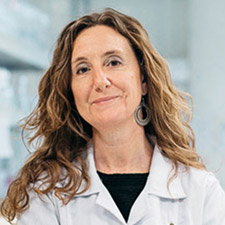
Beatriz Díez
Full Professor at Universidad Mayor
PhD in Biology. Autonomous University of Barcelona, Spain
Spanish biologist Beatriz Díez, a specialist in microbial ecology who studies microorganisms in extremophilic environments, decided to work in Chile for two reasons: first, the country itself offers an amalgam of extreme climatic, geographic, and biochemical conditions; and second, because for her, the scant knowledge of how microbiota ecosystems adapt and survive here needs to be expanded and considered part of the World Heritage.
Read More
Her research focuses on environmental microbiology that arises in polar systems and in cold and/or very warm thermal alpine systems, such as those located in the Atacama, the world’s most arid desert, in some of the country’s 80 active volcanoes, and in the ancient glaciers of Antarctica and the subantarctic. Because of this, Díez and her team have devoted themselves to obtaining new information about microorganisms that live under extreme conditions, recording their adaptations, diversity, function, biogeography, and relations with their environment, including with other organisms in the same place, as well as their potential applications.
While the discovery and study of extremophiles contributes to the investigation of extraterrestrial life, this kind of research can also be used to improve processes in the mining, wine, food, cosmetics, and other industries that use cold or heat chains in their processes or involve exposure to extreme climatic conditions.
“Any microorganism capable of living in an extremophile system has enzymes and adaptive survival strategies that are different from those that can be found in less adverse environments, so this kind of knowledge should be highly valued for assessing and improving industrial processes conducted at high or low temperatures or in very acidic or alkaline contexts,” affirms the microbial ecologist.
This research could also be applied to studies linked to climate change, given that extremophilic organisms have already developed adaptations to extreme temperatures. Today, Beatriz Díez is convinced that understanding how survival is possible under these kinds of conditions will help to characterize the biochemistry that defines the limits of cellular life, and in turn illuminate what could happen in an environment that may not be extremophilic today, but with the effects of climate change, could become so tomorrow.
+ Lab. Manager.
Jhoana Saldias
Industrial Biotechnology
Professional with 8 years of experience in scientific research in the areas of virology, neurosciences, ecology and environmental toxicology. Great ability to work in high performance collaborative environments. Predisposition and capabilities for the implementation of new techniques required to obtain results through self-learning. During her career she has worked closely with undergraduate and graduate students and professionals in the scientific area implementing techniques and solving diverse problems.
+ Post Doc
Blanca Águila
Doctoral Students
xxxxxx
Francisco Issotta
Doctoral Students
We work in the search for new information on the structure, diversity and activity of viral communities present in thermal environments, using the microbial mats present in the geysers of El Tatio (Chile) as a study model. This is achieved through meta-omics analyses that allow us to elucidate the phage communities present and how they may vary according to abiotic factors and geographic distance, to finally help to understand how they may be modulating these microenvironments.
In addition, we analyze hot springs from other parts of the world (United States, China, Canada, among others) that present similar abiotic conditions and thus compare the abundance and diversity of these communities of microorganisms throughout the world.
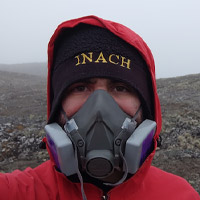
Pablo Vergara
MSc. Biochemistry
Biochemistry
My name is Pablo, I am a biochemist and Ph.D(c) in molecular genetics and microbiology. Throughout my career I have specialized in the molecular biology of photosynthetic organisms, having worked with Arabidopsis thaliana at the beginning of my career, to later develop my thesis on the thermotolerant cyanobacterium Fischerella thermalis and its photosynthetic processes. Recently, I have also collaborated in research on Antarctic lichens and mosses. My research focuses on understanding how the metabolism of F. thermalis has adapted to allow photosynthetic activity at high temperatures. To do this, I have opted for a multi-pronged approach, conducting molecular, physiological and bioinformatics studies to gain a broad view of this process. Personally, I am bored to approach scientific problems always from the same perspective and I am looking for new ways to approach my research, which has led me to learn different techniques and skills ranging from qPCR and massive sequencing analysis, techniques for physiological analysis of photosynthesis and even the use of open platforms such as Arduino. I intend to approach my scientific questions in a multidisciplinary way.
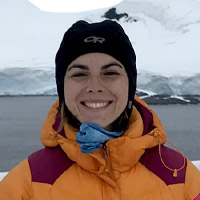
Marianne Buscaglia
MSc. Biochemistry
Biochemistry
Marianne in the framework of her doctoral thesis is studying the viral communities of Antarctic (West Antarctic Peninsula) and Subantarctic (Chilean Patagonia) marine waters, with special emphasis on those viruses that infect phytoplankton. This, because it is relevant to know the set of factors that control the abundance of phytoplankton in these southern waters, being biotic factors such as viruses and their associations with phytoplankton hosts very little explored. Evidence suggests that giant viruses could be potential agents of phytoplankton infection, however, there is little information about them in both austral systems. Therefore, this doctoral thesis aims to deepen the knowledge about these viral communities by answering questions such as: What is the identity and diversity of giant viruses in Antarctic (PAO) and Subantarctic (PCh) marine waters? What are the potential hosts of these giant viruses in these austral waters? Are the giant virus communities of Antarctic marine waters (PAO) unique, or do they share certain characteristics of those of the Subantarctic (PCh)? Have the giant viruses of both austral systems developed adaptation strategies to low temperatures, or only those that inhabit Antarctic waters?
+ PhD. Students
Natali Zamora Bugueño
MSc. Biochemistry
Biochemistry
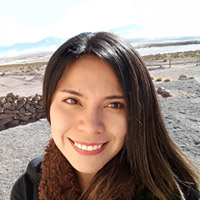
My task in the laboratory is to determine and evaluate the effects of climate change on the taxonomic and functional diversity of prokaryotic communities present in desert soils around the world along a temperature and aridity gradient through my doctoral thesis. The idea of the gradient study is to emulate the possible scenarios in which our soils will find themselves in a few more years, due to drastic changes in climate and temperature. This is why my research will help predict how the effect of temperature will be in the coming years due to global warming on communities and their role in the biogeochemical cycles of desert soils already affected by aridity and will allow us to identify biomarkers that could help predict changes in the aridity of a soil due to climate change.
Read More
This study is carried out from the analysis of metagenomes extracted from public databases of microbial structure composition studies of desert soils with availability of metadata of environmental and climatic conditions, which will be ordered on a scale of aridity and a temperature gradient, which will be taxonomically assigned by bioinformatics tools and different analyses of α and β diversity indices, using statistical software such as Rstudio. Furthermore, within my research, I will perform the study of functional diversity by metagenome assemblies and co-assemblies and additionally, with the help of bioinformatics software, genome assembly analyses will be performed from the metagenomes (MAGs) of the most representative microbial groups. On the other hand, to analyze and compare the different metabolic cycles of each of the deserts, the genome size and percentage of GC within the genome of prokaryotic organisms will also be analyzed, the bacteria – archaeal ratio will be determined, and the active carbohydrate enzymes (“CAZymes”) present in extreme conditions will be analyzed, based on the annotation of the CDS sequences through the use of the dbCAN2 tool.
Finally, in order to determine the effects of temperature and desiccation in the short and long term on the bacterial and archaeal communities present in soils, microcosm experiments will be set up to analyze functional and taxonomic diversity based on the techniques mentioned above. Soil samples with different levels of aridity will be extracted from the Atacama Desert (Chile). These samples will be subjected to different temperatures under water stress, to simulate desiccation events, in a time range of two weeks.
Diego Beecher
MSc. Biochemistry
Biochemistry
My line of research focuses on the ecology of marine environments, mainly on phytoplankton and the biotic factors that modulate their harmful algal bloom (HAB) events. HABs have an impact on the dynamics of oceanic food webs and biogeochemical cycles. We have described a geographic expansion of HAB events from Patagonia to northern Chile and have attempted to reveal the role of viruses in these events. Through metagenomic, metaviromic and metatranscriptomic analyses, we intend to identify the viral and phytoplanktonic communities, their interactions and possible infections in the Patagonian and Antarctic environments of Chile.
Felipe Sepúlveda
MSc. Biochemistry
Biochemistry
We work in the search for new information on the structure, diversity and activity of viral communities present in thermal environments, using the microbial mats present in the geysers of El Tatio (Chile) as a study model. This is achieved through meta-omics analyses that allow us to elucidate the phage communities present and how they may vary according to abiotic factors and geographic distance, to finally help to understand how they may be modulating these microenvironments.
In addition, hot springs from other parts of the world (United States, China, Canada, among others) with similar abiotic conditions are analyzed to compare the abundance and diversity of these microorganism communities throughout the world.
Sebastián Astorga
MSc. Biochemistry
Biochemistry
We work in the search for new information on the structure, diversity and activity of viral communities present in thermal environments, using the microbial mats present in the geysers of El Tatio (Chile) as a study model. This is achieved through meta-omics analyses that allow us to elucidate the phage communities present and how they may vary according to abiotic factors and geographic distance, to finally help to understand how they may be modulating these microenvironments.
In addition, hot springs from other parts of the world (United States, China, Canada, among others) with similar abiotic conditions are analyzed to compare the abundance and diversity of these microorganism communities throughout the world.
+ Research assistants
Camila Toledo
MSc. Biochemistry
Biochemistry
We work in the search for new information on the structure, diversity and activity of viral communities present in thermal environments, using the microbial mats present in the geysers of El Tatio (Chile) as a study model. This is achieved through meta-omics analyses that allow us to elucidate the phage communities present and how they may vary according to abiotic factors and geographic distance, to finally help to understand how they may be modulating these microenvironments.
In addition, hot springs from other parts of the world (United States, China, Canada, among others) with similar abiotic conditions are analyzed to compare the abundance and diversity of these microorganism communities throughout the world.
Felipe Loyola
MSc. Biochemistry
Biochemistry
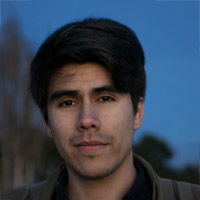
We work in the search for new information on the structure, diversity and activity of viral communities present in thermal environments, using the microbial mats present in the geysers of El Tatio (Chile) as a study model. This is achieved through meta-omics analyses that allow us to elucidate the phage communities present and how they may vary according to abiotic factors and geographic distance, to finally help to understand how they may be modulating these microenvironments.
In addition, hot springs from other parts of the world (United States, China, Canada, among others) with similar abiotic conditions are analyzed to compare the abundance and diversity of these microorganism communities throughout the world.

Wilson Castillo
Biochemistry
Using Bahía Chile as a model, we seek to elucidate the phage communities that are present in Antarctic coastal waters between the summers of 2014 and 2019. During these summer seasons, the largest phytoplankton bloom in the area occurs, strongly influencing the entire ecosystem. Through taxonomic analysis of metagenomes, we seek to rescue viral sequences and search for AMGs involved in the main biogeochemical cycles and stress response processes. Thus, the objective of this project is to describe the role of the phage community in Antarctic coastal waters during a phytoplankton bloom in different consecutive years.
+ Collaborators
Jaime Alcorta
MSc. Biochemistry
Biochemistry
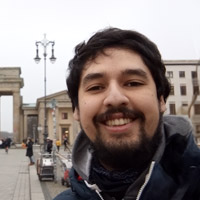
The study of microbial genomes has revealed fundamental aspects about the evolution of life. New DNA sequencing methodologies have allowed greater analysis of these genomes from environmental samples without the need to isolate them, and our research is currently focused on the study of the members of microbial mats that develop in hydrothermal vents throughout the world. Our line of research encompasses two central axes:
Read More
The study of genes related to various biogeochemical cycles (carbon, nitrogen, sulfur, among others) in metagenomes from hot springs around the world and the genomes assembled from metagenomes (MAGs) of the members that could be involved in them, from more than 80 metagenomes from 32 to 98 °C.
The study of comparative genomics of cyanobacteria, which correspond to an important group in the thermal environment (and of global importance in many ecosystems such as the ocean), to search for genes that could be related to adaptation to high temperatures, together with a focus on the evolution of the genus Fischerella where we found filamentous, branching and heterocyst-forming cyanobacteria.
These genomes will help us to understand the functioning and composition of microbial communities in extreme systems, and will help to understand how genes related to biogeochemical cycles or adaptations to high temperatures have spread along the tree of life.
Oscar Salgado
Bachelor of Education in Biology
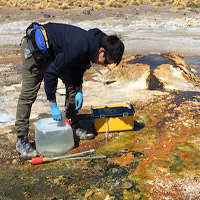
Work with viruses and CRISPR-Cas systems of environmental bacteria. Specifically to understand the diversity of the host-pathogen relationship in thermal environments through meta-analysis of hot springs around the world and also using the El Tatio geyser field as a model system.
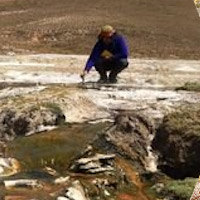
Sergio Guajardo-Leiva
PhD. in Biological Sciences
MSc. in Biological Sciences
BSc in Biochemistry
Viruses are ubiquitous, and viral infections may well affect all bacteria in all environments on Earth at some point in time. If we consider the well-documented information on marine habitats, viruses lyse approximately one-third of the ocean microorganisms per day, liberating carbon and nutrients globally. However, our current knowledge of viral diversity in other environments and their effects on bacterial populations is rudimentary at best. With this aim, I study viral genomics and metagenomics to understand the interaction of viruses with biotic and abiotic factors in different environments. Specifically, I am studying viral communities’ role in the biogeochemical cycles of plants’ rhizosphere and their interaction with rhizospheric microorganisms and soil’s physicochemical factors. I also study viral diversity and viral dark matter in urban environments such as sewage treatment plants and the urban aerobiome. Finally, I am interested in deciphering aquaculture’s impact on the fjords’ viral communities in Chilean Patagonia.
Sergio currently holds a postdoctoral position at Castro Lab, from Universidad Andrés Bello, Chile. And is member of Polarix.
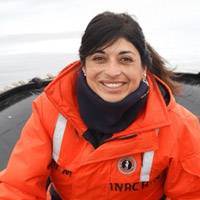
María Estrella Alcamán
PhD. in Biological Sciences
MSc. in Biological Sciences
BSc in Biochemistry
Marine Biologist from Universidad de Concepción, Master and PhD in Biological Sciences with mention in Molecular Genetics and Microbiology from Pontificia Universidad Católica de Chile. Postdoctoral at the University of Concepción, and Center for Climate Science and Resilience (CR2) of the University of Chile. Executive member of the Association of Young Polar Researchers APECS Chile.
Read More
My line of research focuses on microbial ecology and biogeochemical cycles of terrestrial and coastal oceanic thermal subpolar and polar systems. In addition to the study of molecular genetics, microbiology, bioinformatics, biological and chemical oceanography, physiology of stremophilic microorganisms, and aerobiome. My particular interest lies in investigating how climatic factors exacerbated by climate change, such as temperature increase, glacial melting, are affecting the diversity and activity of key microbial communities for the primary production of the polar coastal marine system, and therefore its effect on local and global biogeochemical cycles. I am currently developing my Fondecyt Initiation (2020-2023) in Antarctica to unveil the interaction of air, snow and ocean microorganisms, and how this is related to anthropogenic pollutants in the white continent.
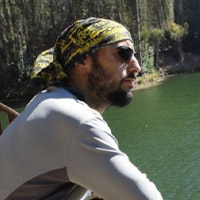
Sebastian Fuentes Alburquenque
xxx
xxx
Read More
My line of research focuses on microbial ecology and biogeochemical cycles of terrestrial and coastal oceanic thermal subpolar and polar systems. In addition to the study of molecular genetics, microbiology, bioinformatics, biological and chemical oceanography, physiology of stremophilic microorganisms, and aerobiome. My particular interest lies in investigating how climatic factors exacerbated by climate change, such as temperature increase, glacial melting, are affecting the diversity and activity of key microbial communities for the primary production of the polar coastal marine system, and therefore its effect on local and global biogeochemical cycles. I am currently developing my Fondecyt Initiation (2020-2023) in Antarctica to unveil the interaction of air, snow and ocean microorganisms, and how this is related to anthropogenic pollutants in the white continent.